Introduction
The workplace is changing faster than ever. Remote work, hybrid teams, artificial intelligence, and digital collaboration have transformed how businesses manage their employees. Traditional management methods that once depended on physical supervision and manual attendance records are no longer sufficient for modern organizations.
In 2026, businesses need more than basic attendance systems. They need a clear understanding of how working hours are utilized, how teams manage their daily responsibilities, and where productivity improvements can be made.
This shift is changing the way organizations approach workforce management. Modern technology is helping companies understand employee activity, measure working hours, identify productivity patterns, and make better business decisions.
However, the future is not about watching employees every minute. It is about creating a transparent working environment where organizations can improve efficiency while respecting employee privacy.
As businesses continue adopting digital workplace solutions, several important developments are shaping the industry.
Let's explore the seven major trends that will influence the future of employee monitoring in 2026 and beyond.
1. Artificial Intelligence Will Transform Productivity Tracking
Artificial intelligence is becoming one of the most influential technologies in modern business operations. Its impact on workforce management is growing as organizations look for smarter ways to understand employee performance.
Traditional tracking systems mainly collect information about working hours, application usage, and employee activity. Managers often need to review multiple reports manually to understand what is happening across their teams.
AI-powered solutions are changing this process by helping businesses analyze large amounts of workforce data more efficiently.
For example, intelligent analytics can help organizations:
Identify unusual changes in employee activity.
Recognize patterns in productive and idle working hours.
Understand how teams distribute their time.
Identify recurring productivity challenges.
Generate useful reports for management decisions.
Another important development is role-based productivity analysis. Employees in different departments use different applications and follow different workflows. A software developer may spend most of the day working in coding environments, while a graphic designer may use creative applications.
AI can help organizations interpret these activities according to job responsibilities instead of applying the same productivity expectations to everyone.
What businesses should expect: AI will increasingly support managers with data analysis, reporting, and workforce insights. However, organizations should ensure that automated recommendations are reviewed fairly and are not treated as the only measure of employee performance.
2. Remote and Hybrid Work Will Increase the Need for Workforce Visibility
Remote and hybrid working arrangements have become important parts of modern business operations. Companies can now hire talent from different cities and countries without requiring everyone to work from the same office.
Although this approach offers flexibility, it also creates management challenges.
Managers may find it difficult to understand whether working hours are being utilized effectively, identify workload distribution problems, or maintain consistent attendance records across different locations.
This is where digital workforce visibility becomes important.
Modern monitoring platforms help organizations maintain visibility into daily work activities without requiring physical supervision.
Businesses can use these solutions to:
Record employee login and logout times.
Calculate total working hours.
Understand active and idle time.
Review application and website usage.
Monitor team activity through centralized dashboards.
Generate attendance and productivity reports.
For example, an IT company managing employees across multiple locations can use centralized reporting to understand team activity without contacting every employee individually.
The same approach can help creative agencies, consulting firms, and other service-based businesses manage distributed teams.
What businesses should expect: Workforce visibility will become an important management requirement for organizations operating with remote and hybrid teams. Companies will increasingly prefer centralized systems that provide consistent information across different working environments.
3. Privacy-First Monitoring Will Become a Business Priority
As digital tracking becomes more common, employee privacy will become an increasingly important consideration.
Employees want flexibility, professional independence, and clarity about how their workplace information is collected and used. Excessive or hidden monitoring can create unnecessary stress and reduce trust between employees and management.
The future of monitoring will therefore depend on finding the right balance between business visibility and employee privacy.
Organizations should focus on responsible monitoring practices instead of collecting information without a clear purpose.
Some important practices include:
Informing employees about monitoring policies.
Explaining what information is collected.
Defining when tracking is active.
Restricting access to sensitive employee information.
Collecting only data that serves a legitimate business purpose.
Establishing clear data retention and security policies.
Transparency is particularly important when companies introduce screenshots, application tracking, or activity monitoring.
Employees should understand why these features are being used and how the collected information supports business operations.
Organizations should also review applicable data protection and employment laws before implementing monitoring technologies.
What businesses should expect: Privacy controls, clear communication, and responsible data management will become essential considerations when selecting workplace technology.
4. Real-Time Activity Tracking Will Improve Workforce Management
Traditional attendance systems primarily answer one question: When did an employee arrive and leave?
However, attendance alone does not provide a complete picture of how working hours are utilized.
For modern businesses, understanding activity patterns is becoming equally important.
Real-time activity tracking helps managers understand how employees utilize their working hours. Instead of relying entirely on manual updates, organizations can review activity information through centralized dashboards.
For example, managers may be able to understand:
How much time employees spend actively working.
When periods of inactivity occur.
Which applications are being used during working hours.
How much time is spent on productive and non-productive activities.
Whether employees are maintaining consistent work schedules.
Periodic screenshots can also provide additional context about desktop activity, depending on the organization's monitoring policy and employee notification practices.
Consider an organization with 30 employees working on multiple projects. Reviewing each person's daily work manually would require considerable time.
A centralized activity dashboard can help managers identify patterns and understand where additional support or workflow improvements may be needed.
However, activity information should always be interpreted in context. A short period of inactivity does not necessarily mean an employee is unproductive. Employees may be attending meetings, thinking through complex problems, or taking necessary breaks.
What businesses should expect: Real-time activity insights will help organizations move from manual supervision toward more informed workforce management.
5. Data-Driven Decisions Will Replace Guesswork
Business decisions are more effective when they are supported by reliable information.
In many organizations, managers still depend on manual attendance sheets, employee updates, spreadsheets, and individual reports to understand workforce performance.
These processes can create inconsistencies, calculation errors, and unnecessary administrative work.
Modern digital platforms are bringing different types of workforce information together in one place.
By combining attendance records, working hours, activity information, and productivity reports, businesses can develop a clearer understanding of their operations.
For example, management teams can use historical reports to identify:
Departments experiencing frequent attendance irregularities.
Teams with consistently high workloads.
Repeated late arrivals or early departures.
Differences between expected and actual working hours.
Opportunities to improve resource allocation.
These insights can also support better planning.
A business may discover that a particular department regularly requires additional time to complete its responsibilities. Rather than immediately increasing working hours, management can investigate workload distribution, resource availability, and operational bottlenecks.
This approach helps organizations solve problems using evidence instead of assumptions.
For companies that manage attendance, payroll calculations, and employee records, integrating leave management software with broader workforce processes can also help create more organized administrative workflows.
What businesses should expect: Workforce analytics will become an important part of strategic decision-making, helping companies improve efficiency and plan resources more effectively.
6. Integrated Workforce Platforms Will Reduce Manual Work
Businesses often use separate tools for attendance, productivity tracking, application usage, reporting, and employee management.
Although individual tools may perform their functions effectively, managing multiple platforms can create unnecessary complexity.
Employees may need to enter information repeatedly, while HR teams and managers spend additional time collecting data from different sources.
This is encouraging organizations to adopt integrated workforce platforms.
Instead of switching between several applications, businesses increasingly prefer solutions that bring important workforce information together.
A centralized platform can help organizations manage:
Employee attendance and working hours.
Application and website usage.
Productive and non-productive time.
Idle time and activity levels.
Daily and monthly reports.
Team-level workforce visibility.
For example, a software company can use a centralized dashboard to understand attendance and work activity across its development department.
Similarly, organizations that rely on specialized Developer Time Tracking Software can benefit from understanding how project-related work hours are distributed across development activities.
Integration also creates opportunities for better reporting. When relevant information is available in one place, managers can spend less time collecting data and more time improving workflows.
However, businesses should evaluate integration capabilities carefully. They should confirm that the required features, third-party connections, and reporting options are actually supported by the selected platform.
What businesses should expect: Organizations will increasingly look for connected platforms that simplify workforce administration, reduce repetitive tasks, and provide a consistent view of employee information.
7. Employee Experience and Productivity Will Become Equally Important
One of the biggest changes in workforce management is the growing recognition that productivity and employee well-being are connected.
For many years, businesses focused heavily on attendance, working hours, and the number of tasks completed. However, modern organizations are beginning to recognize that continuously increasing work pressure does not necessarily improve results.
Employees need reasonable workloads, proper breaks, clear expectations, and an environment where they can perform their responsibilities effectively.
Technology can help managers identify potential problems before they become larger operational challenges.
For example, workforce reports may reveal that certain employees regularly work beyond their scheduled hours. Managers can investigate whether these patterns are caused by excessive workloads, inefficient processes, or staffing shortages.
Similarly, activity reports can help identify repeated interruptions or excessive time spent switching between applications.
These insights should be used to improve working conditions rather than create unnecessary pressure.
Businesses can improve employee experience by:
Setting clear expectations about working hours.
Encouraging healthy work schedules.
Recognizing consistent contributions.
Providing constructive performance feedback.
Identifying workload imbalances.
Maintaining transparent monitoring policies.
Employee involvement is also important when introducing new workplace technologies. Explaining the purpose of monitoring and giving employees visibility into relevant records can help build confidence.
What businesses should expect: Successful organizations will focus on sustainable productivity, combining operational visibility with employee trust and workplace flexibility.
How Should Businesses Prepare for the Future of Employee Monitoring?
Understanding industry trends is only the first step. Businesses also need a practical strategy for adopting modern workforce technologies.
Here are five important steps organizations can follow:
1. Identify Your Business Requirements
Start by understanding the challenges your organization currently faces.
Are attendance records inaccurate? Are managers spending too much time preparing reports? Is it difficult to understand how remote employees utilize their working hours?
Identifying these challenges will help you select the right technology.
2. Choose the Right Features
Not every organization needs every monitoring feature.
Some businesses may primarily require attendance tracking, while others may need application usage reports, idle time tracking, screenshots, or detailed productivity analytics.
Select features according to your actual operational requirements.
3. Establish a Transparent Monitoring Policy
Before introducing monitoring technology, communicate its purpose to employees.
Clearly explain what information will be collected, when monitoring will operate, who can access the information, and how the data will be used.
4. Train Managers and Employees
Technology delivers better results when people understand how to use it.
Managers should learn how to interpret reports fairly, while employees should understand how the system works and how it supports organizational processes.
5. Review Results Regularly
After implementation, evaluate whether the selected solution is actually improving business operations.
Review attendance accuracy, administrative workload, reporting efficiency, and employee feedback.
Make adjustments whenever necessary.
How Team Treck Supports Modern Workforce Management
As businesses move toward more technology-driven operations, having a centralized view of employee attendance and work activity can make everyday management easier.
Team Treck is designed to help organizations understand working hours, monitor desktop activity, and gain better visibility into employee productivity.
Its features support businesses that want to reduce manual tracking and make workforce information easier to access.
Key capabilities include:
Automatic Time Tracking: Understand employee working hours through automated time tracking.
Idle Time Tracking: Identify periods of inactivity during working hours.
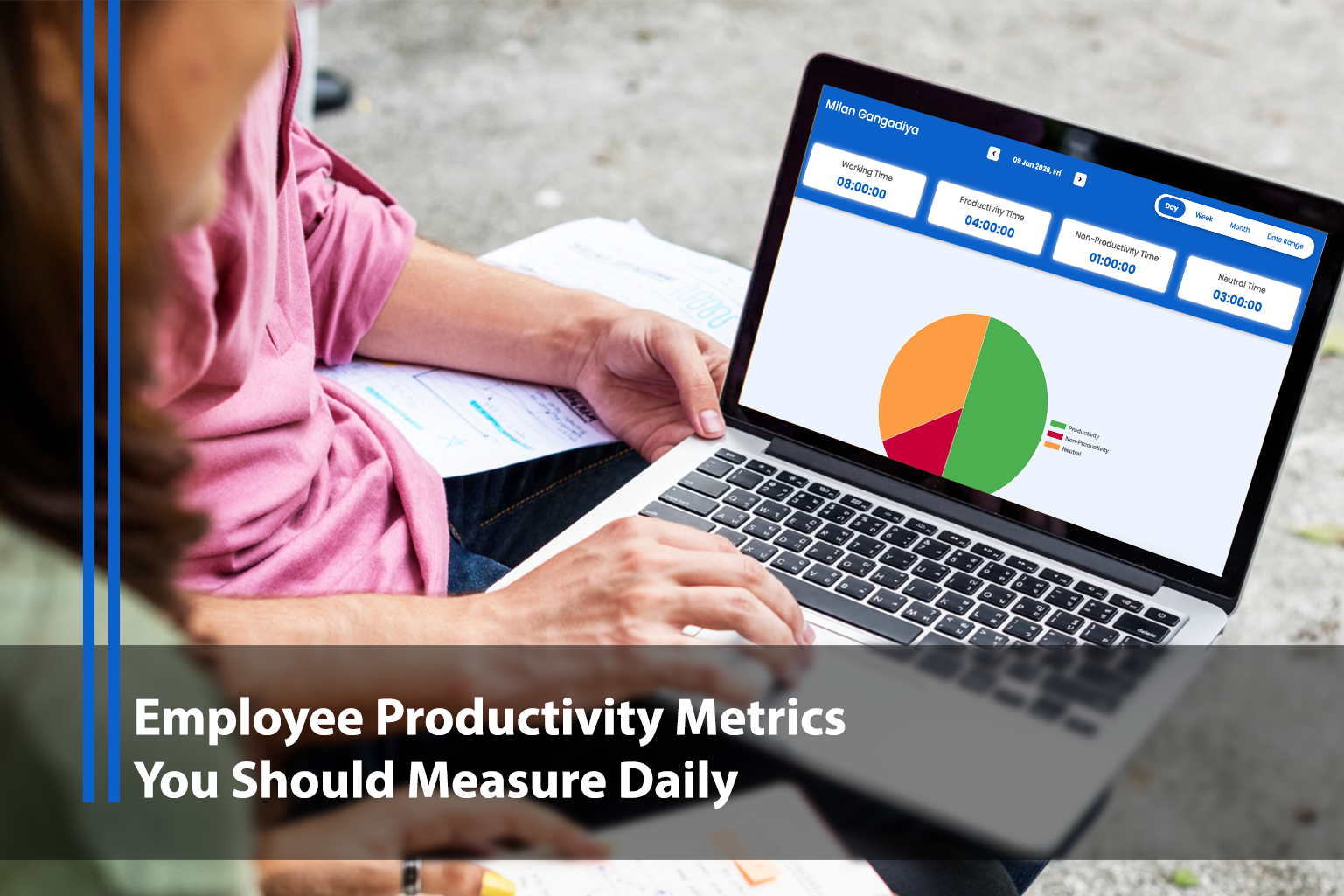
Productivity Classification: Categorize activities as productive, non-productive, or neutral.
Application Usage Tracking: Understand which applications employees use during work.
Website and URL Tracking: Review website usage during working hours.
Real-Time Activity Monitoring: Gain visibility into employee desktop activity.
Periodic Screenshots: Capture up to 12 screenshots per hour to provide additional context about work activity.
Centralized Dashboard: Access important employee information through one dashboard.
Attendance and Productivity Reports: Review workforce activity through organized reports.
Monthly Attendance and Salary Reports: Simplify reporting with consolidated information.
These capabilities can help IT companies, remote teams, creative agencies, and other businesses understand how working hours are utilized.
Rather than depending entirely on manual updates, managers can use workforce information to identify improvement opportunities and make more informed decisions.
Conclusion
The future of employee monitoring in 2026 is moving beyond traditional attendance records and basic activity tracking.
Artificial intelligence, remote work, privacy-focused practices, real-time activity insights, workforce analytics, integrated platforms, and employee experience are reshaping how businesses manage their teams.
Organizations that adopt these developments responsibly can improve operational visibility, reduce administrative work, and make better decisions about workforce productivity.
However, technology alone cannot create a productive workplace. Successful implementation requires clear policies, transparent communication, fair performance evaluation, and respect for employee privacy.
The goal should not be to monitor employees simply for the sake of monitoring. It should be to understand work patterns, improve business processes, and create an environment where both employees and organizations can perform better.
As workplaces continue evolving, businesses that combine smart technology with responsible management practices will be better prepared for the future.